When flowers turn red: Pathogen induced flavonoid and anthocyanin biosynthesis in Chrysanthemum seticuspe confers resistance to Botrytis cinerea (preprint)
 Biorxiv
Abstract
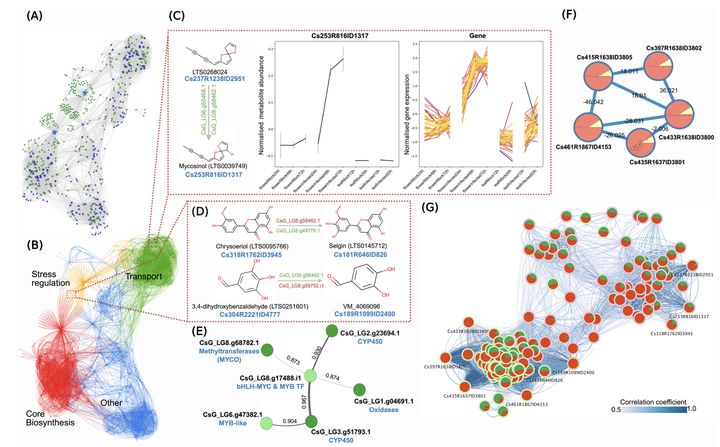
Botrytis cinerea is a major threat to ornamental crops, yet floral defence responses remain poorly understood. In Chrysanthemum seticuspe, we found that flower petals, unlike leaves, mount a localized resistance response resulting in red spots appearing at fungal penetration sites. We observed an intensification of the coloured response as infections progressed. To investigate the basis of this phenotype, we performed a time course paired transcriptomic and metabolomic analysis on mock inoculated vs B. cinerea inoculated petals and leaves. Infection triggered strong transcriptional reprogramming in petals, with clear induction of phenylpropanoid and flavonoid/anthocyanin pathway genes and candidate regulators, consistent with the visible pigmentation. Metabolite profiles reflected this response, showing time dependent accumulation of infection induced flavonoids such as quercetin, tilianin, and their derivatives, as well as cyanidin-based anthocyanins in infected petals. Integrating both omics datasets with MEANtools highlighted an anthocyanin associated transcript metabolite module, including a module putatively involved in the synthesis of polyyne type phytoalexins. Antifungal assays demonstrated that selected flavonoids and cyanidin derivatives inhibit B. cinerea in a dose dependent manner, supporting a direct antifungal role of these compounds. Altogether, our results show that C. seticuspe petals deploy a spatially confined, multi-layered chemical defence in which pathogen induced flavonoids and anthocyanins operate as active components of resistance against a necrotrophic pathogen. We anticipate that future paired omics analyses in combination with spatial omics and bioactivity assays will yield insights into the role of specialised defence molecules in response to biotic and abiotic stresses.